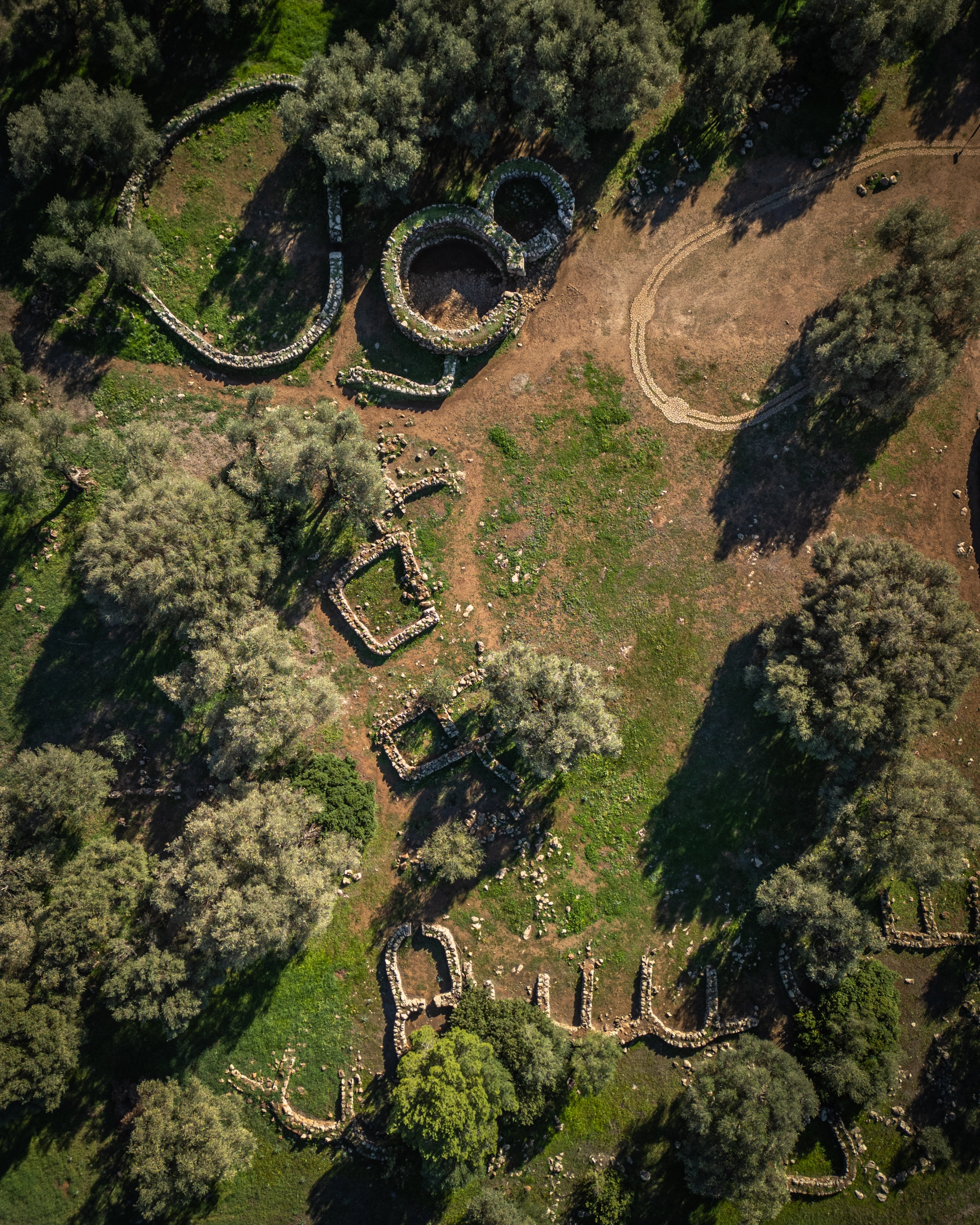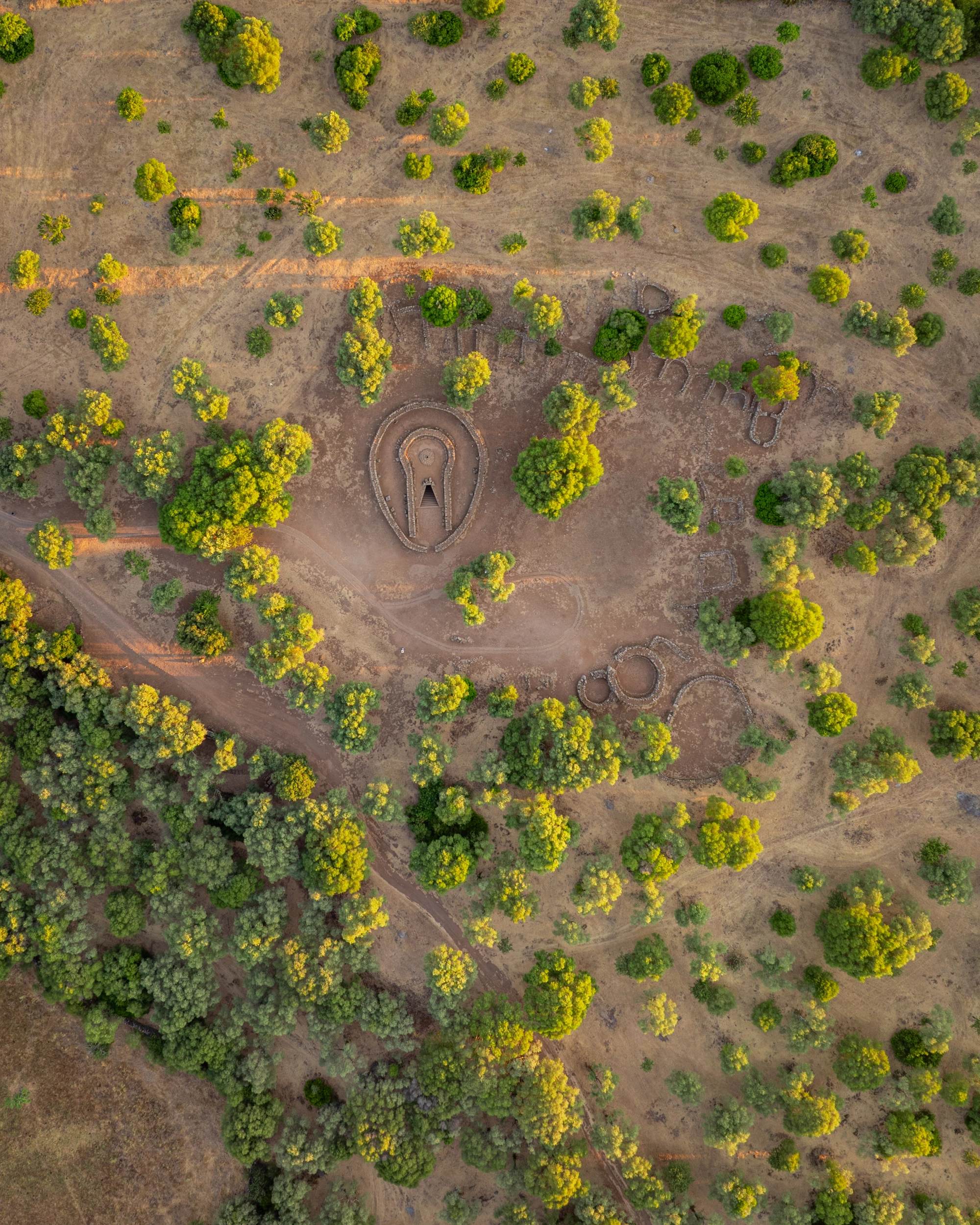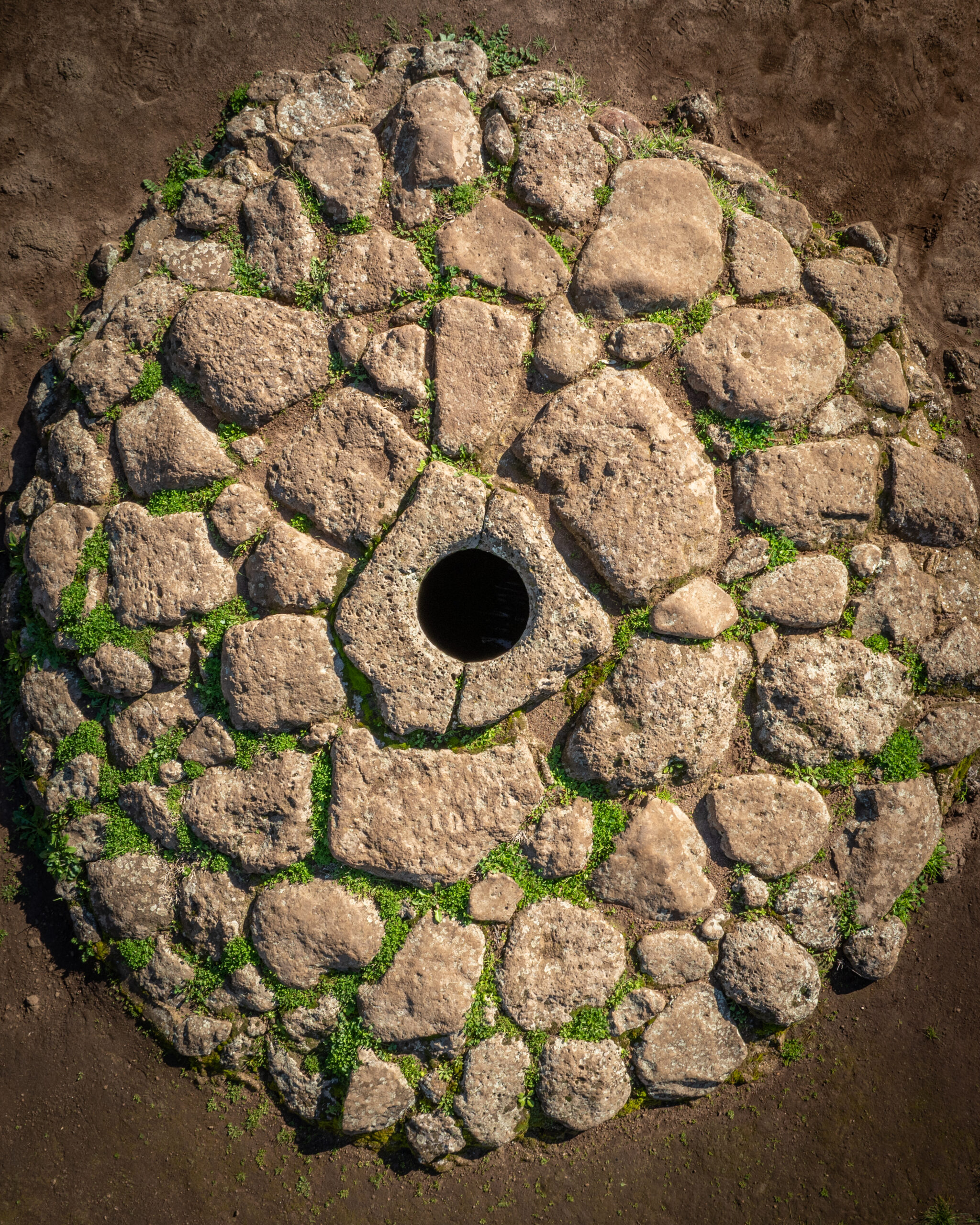
The Sacred Well of Santa Cristina Archaeological Site, located in the heart of Sardinia in the territory of Paulilatino (province of Oristano), is today one of the island’s most fascinating and enigmatic archaeological monuments. Its architectural perfection, astronomical alignment, and connection with water cults make it unique within the Mediterranean landscape.
But how was it discovered? Who first described it? And how did archaeological excavations bring it back to its present form?
This article retraces the history of the discovery of the Sacred Well of Santa Cristina and the main excavation campaigns that gradually revealed its function and significance.
The First 19th-Century Reports
The earliest written reference to the well dates back to 1851, when the canon Vittorio Angius and Goffredo Casalis mentioned it in their Dizionario geografico, storico, statistico e commerciale degli Stati di S. M. il Re di Sardegna. In their description of Paulilatino, they referred to a “singular funnel-shaped construction” located near the Church of Santa Cristina, then believed to belong to the Camaldolese monks of Bonarcado.
They emphasized that no one at that time had been able to explain the structure’s purpose. Even in the mid-19th century, the monument was already surrounded by mystery.
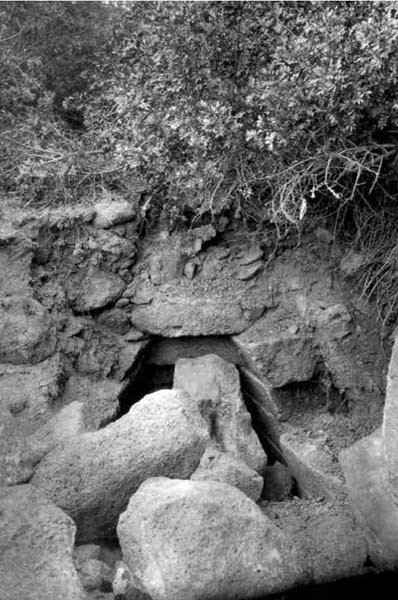
Photograph by Peter Paul Mackey and survey by Newton
(Photo reference: A. Moravetti, 2003)
Giovanni Spano and the First Archaeological Description
A few years later, in 1857, the canon Giovanni Spano—considered the father of Sardinian archaeology—was deeply impressed by the monument. In the Bollettino Archeologico Sardo, he described the well’s cyclopean architecture, built with large basalt blocks carefully shaped and assembled without mortar.
Spano also published drawings made by the young Vincenzo Crespi, providing scholars with the first technical documentation of the structure. However, his interpretation was incorrect: he believed the well to be a kind of underground prison, a common explanation at the time for enigmatic ancient constructions.
Early Misinterpretations
Alberto La Marmora, in his Itinerario dell’Isola di Sardegna (1860), repeated Spano’s description without adding new insights. In 1869, the German traveler Heinrich von Maltzan referred to the Putu de S. Cristina, still considering it a medieval work—further evidence that the monument’s original function remained unclear.
A decisive change in interpretation would come only in the early 20th century.
Antonio Taramelli and the Water Cult Hypothesis
In 1917, archaeologist Antonio Taramelli, while excavating the Sacred Well of Santa Vittoria Sanctuary, reflected again on the site at Paulilatino. Though he did not conduct systematic excavations there at the time, he recognized clear similarities between the two monuments.
He understood that the structure was neither a prison nor a simple water source, but rather an underground temple connected to the cult of water. Taramelli also intuited that the monumental staircase was not meant for practical water collection, but for ritual descent associated with religious ceremonies. This insight opened the way for new interpretations, confirmed decades later.
The Excavations of Enrico Atzeni
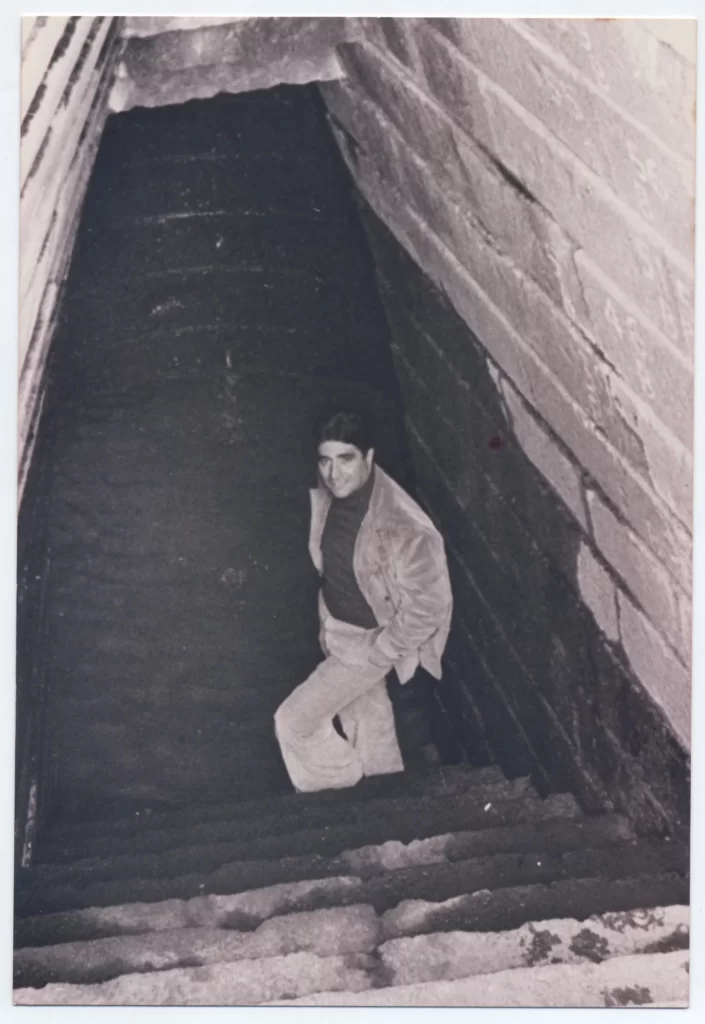
The scholar most closely associated with the Sacred Well of Santa Cristina is Enrico Atzeni. In the 1960s, as a young assistant to Giovanni Lilliu, Atzeni launched the first systematic excavation campaign at the site.
The situation was critical: the monument had been severely damaged by looters, who had even used explosives to remove stone blocks and buried objects. With remarkable rigor, Atzeni carried out restoration and recovery operations that allowed the reconstruction of the well’s original shape, carefully distinguishing authentic parts from reintegrated sections.
Thanks to his work, the sacred area became legible and accessible once again, with the identification of the external enclosure, the vestibule, and traces of stone seating that confirmed the ritual function of the site.
Architecture and Symbolism
The temple-well of Santa Cristina consists of a vestibule, a staircase of 25 steps, and a circular underground chamber with a corbelled (tholos) dome. The entrance is precisely oriented according to astronomical phenomena: during the equinoxes, sunlight penetrates along the staircase to illuminate the water, while during certain lunar phases the vault reflects celestial light with remarkable accuracy.
These features reinforce the interpretation of a sacred place dedicated to water worship—water as both a vital resource and a symbolic element linked to fertility, rebirth, and connection with the divine.
Legends and Popular Traditions
Alongside scientific explanations, local legends persist. One tale recounts that Saint Christina disappeared into the well while fleeing persecution from her father for refusing an arranged marriage. Another speaks of the magical and potentially dangerous powers of the well’s water, with some still advising against touching it.
The discovery of bronze votive figurines offered in gratitude for healing and protection further testifies to a deep spirituality connected to water as a purifying and curative force.
These stories demonstrate how, even after millennia, the monument retains an aura of sacredness and mystery.
The Sacred Well Today
Today, the Sacred Well of Santa Cristina is recognized as one of the most important examples of Nuragic architecture linked to water cults. It forms part of a larger archaeological complex that includes a Nuragic village, a meeting hut, and additional nuraghi in the surrounding territory.
It is an essential stop for anyone wishing to explore Sardinia’s archaeology—a place where science, history, spirituality, and myth converge.
The history of its discovery is emblematic: from a curious “funnel-shaped construction” noted in the 19th century, to a supposed prison in early interpretations, to its recognition as an extraordinary Nuragic temple dedicated to water worship, thanks to the insights of Taramelli and the excavations of Enrico Atzeni.
Today, visiting the site means not only admiring one of the most refined architectural achievements of the Nuragic age, but also embarking on a journey between myth and archaeology—seeking a past that continues to speak with millennia-old strength.